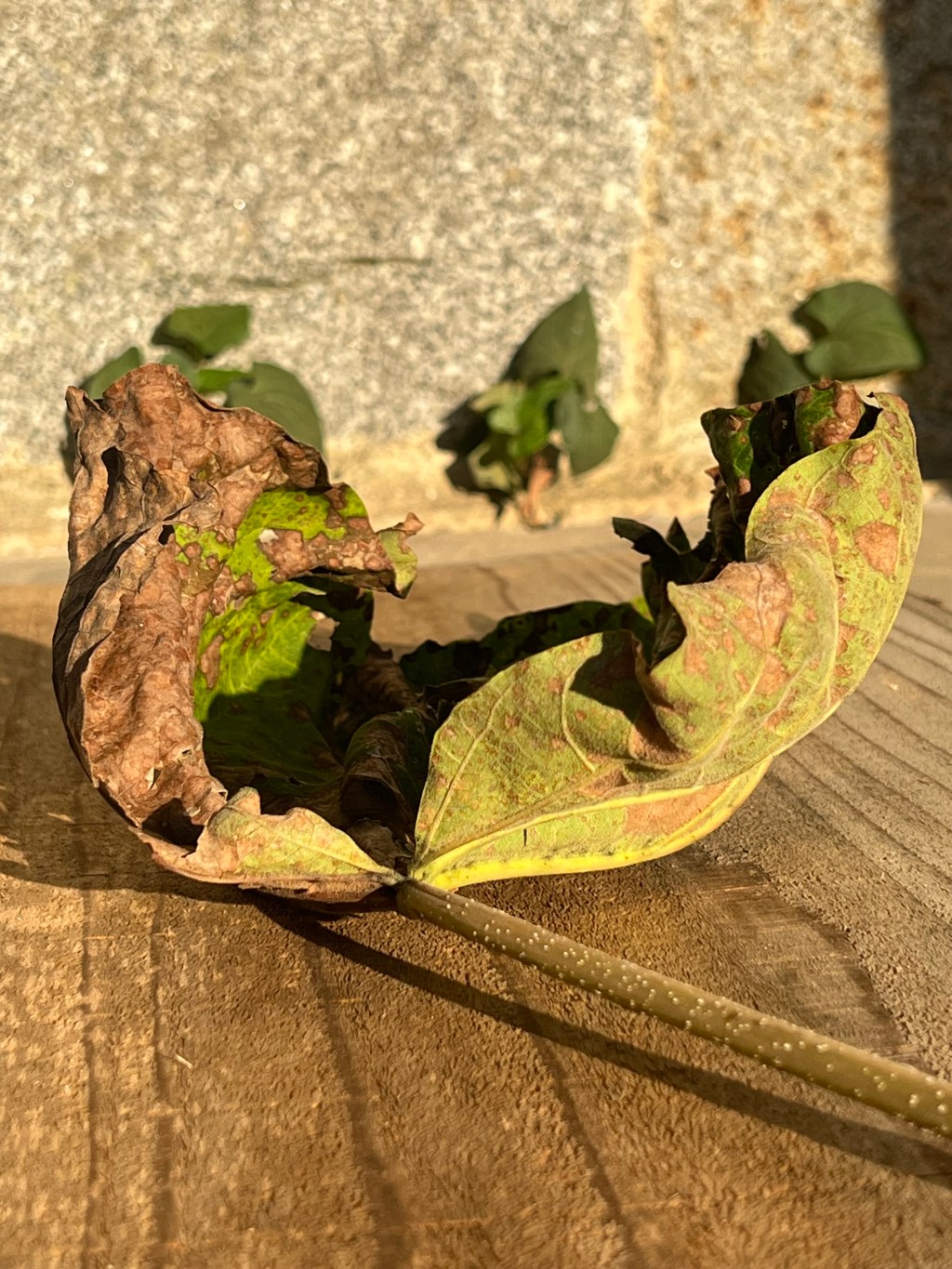

In Kyoto-style Sashimono, Paulownia wood or 桐 (kiri) is most often used when joining wood pieces together to make boxes, such as the ones we are currently making as part of our apprenticeship. For example, 桐箱 (kiribako) means Paulownia-wood storage box. In the world of Japanese tea, such boxes are called 茶箱 (chabako), tea boxes, which are used to store and protect 茶道具 (chadōgu), or Tea Instruments of the Way (the utensils that support the Way of Tea). They can be general storage boxes, or hyper-specific with little compartments for each individual piece of teaware. This type of work was specifically called, “tea ceremony sashimono.” And because Kyoto was the epicenter of Japanese tea culture, they were almost all made of Paulownia. Other woods are used (especially in different parts of Japan) but the vast majority of Kyoto-style Sashimono boxes are made of Paulownia.

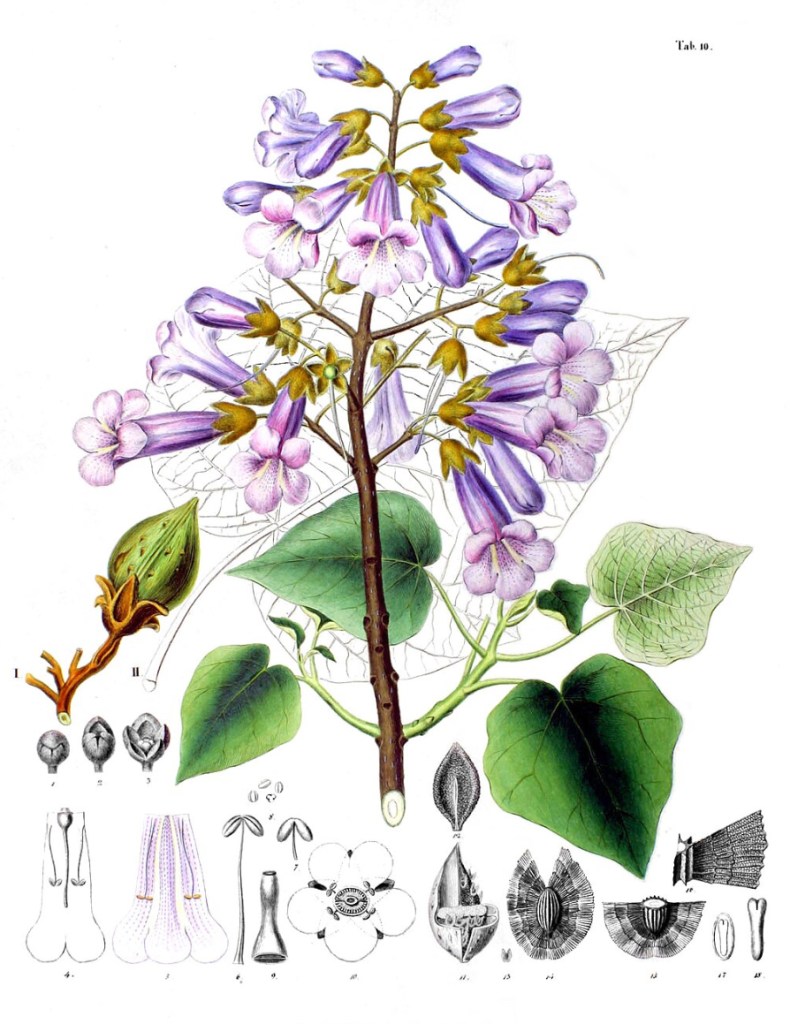
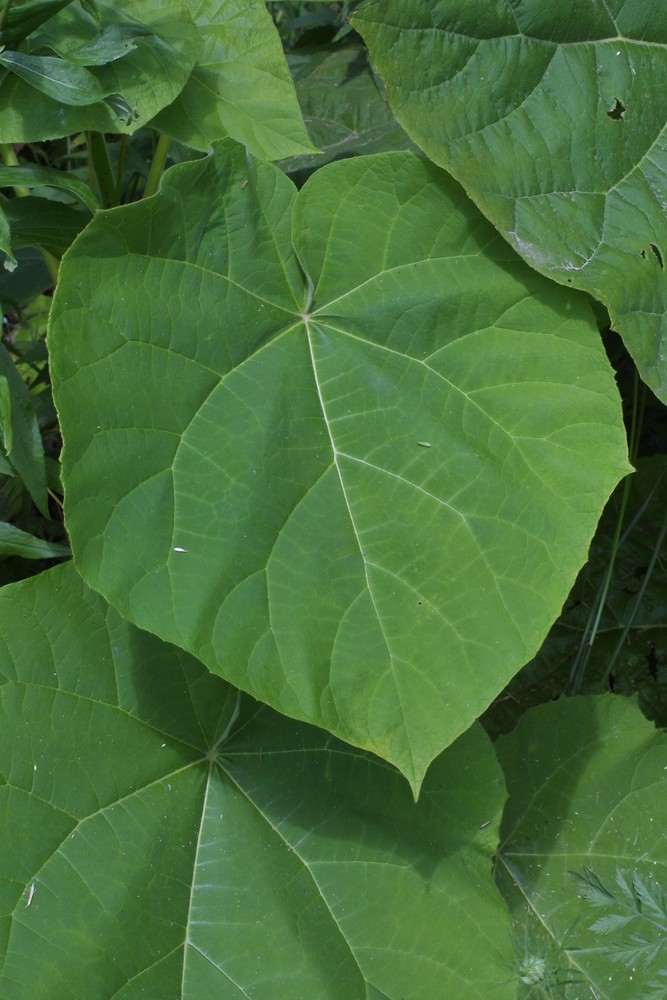

Paulownia is a deciduous hardwood. The wood itself is actually very soft and lightweight (“hardwood” describes botanical characteristics, not the hardness or softness of wood). The leaves can be massive, green as fresh moss on a Japanese stone lantern after a spring rain; the flowers, violet as a rainbow; the milled wood, white-golden as bakery fresh bread, soft on the eyes as it is in the hand.
It’s a unique wood with natural properties that make it perfect for making storage boxes:
- lightweight and easy to carry and transport
- despite being lightweight, it is strong and durable
- straight grained and soft, making it easy to work with and pleasing to the eye.
- when aged, weathered, and milled properly, it is stable and relatively warp-resistant, and shrinks very minimally, making it great for wood joinery.
- fire-resistant. It ignites at a higher temperature than most other woods (~400°C+).
- insect-resistance. Naturally occurring tannins and oils deter pests and prevent against molds.
- breathable. The wood itself has a very mild aroma. The porous structure allows it to breathe, which buffers humidity and other aromas making it perfect for storing valuables. This also protects against mold and mustiness.
It’s interesting to note here that the porosity of zisha (purple-sand clay) used to make gongfu teapots (left), and that of kiri wood (right) both play an important role in the function of these two materials—allowing them to breath and buffer factors such as temperature and the movement of air and moisture.


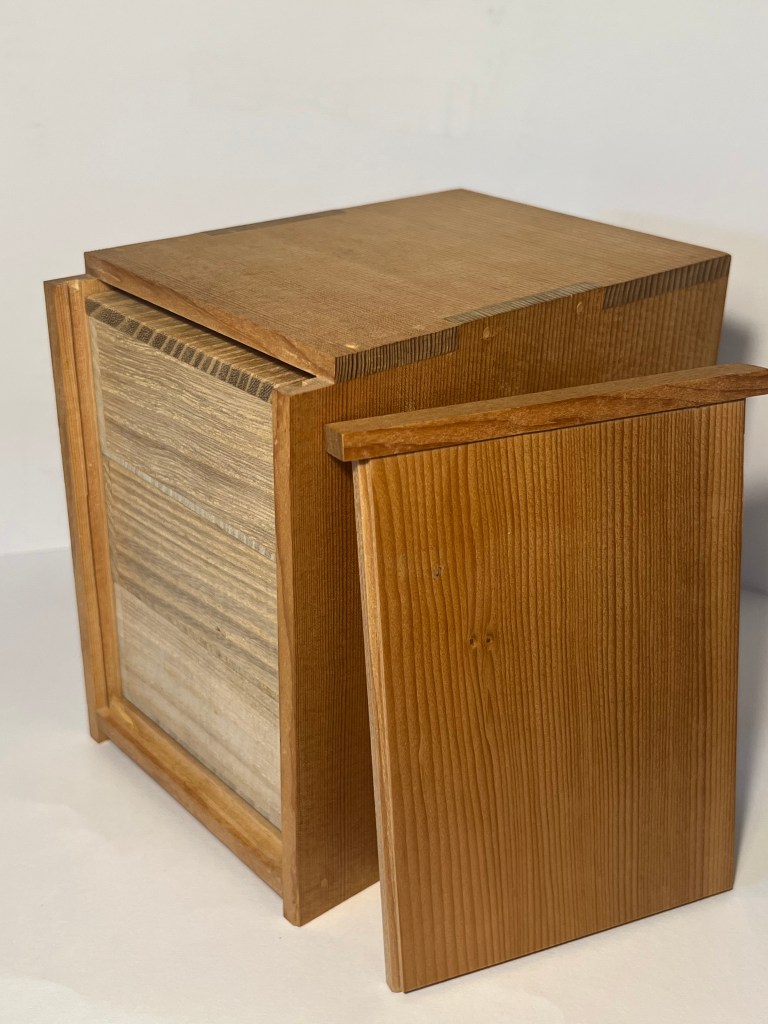
In this program, we will be making a Hinoki + Paulownia wood bento box in order to learn the technique of sashimono on a simple project. Once finished, however, we can apply this technique to any style of box, drawer, chest, or cabinet we can conceive of, and for me, that’s going to mean a lot of tea-specific Paulownia projects. Almost any Japanese tea cabinet, large or small, will have a significant portion made of Paulownia wood and joined using sashimono joinery techniques. While many are laminated using beautifully grained veneers, the majority of the structure, especially as seen in the drawers, will be made of Paulownia.
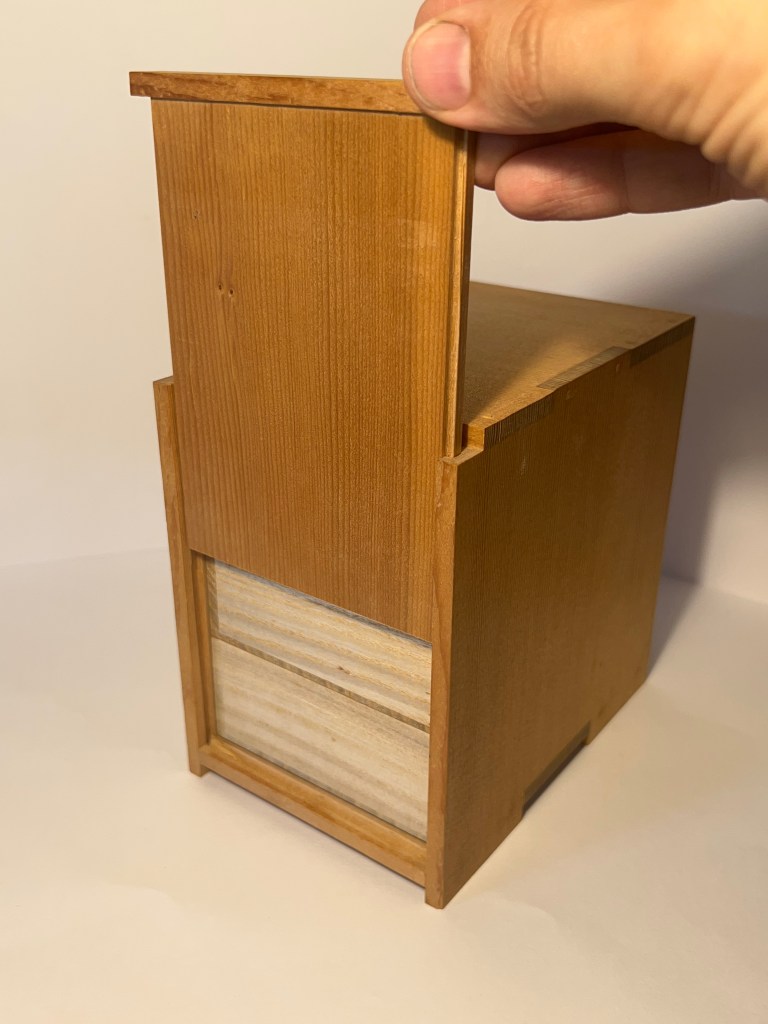
The interior of our bento box will be made of Paulownia because it will come in contact with food. In fact, we are also going to learn how to stain our bento box with natural lacquer (urushi) to make it even more beautiful and suitable for food (which will be covered in a future post). The exterior will be made of Japanese Hinoki as seen below.



 The Wooden Mirror
Leave a reply to Erika Kubisch Cancel reply