

Week 4

This is the view from my quarters in the small town of Keihoku, a blend of industry, country-side living, and Nature. The morning mists and surrounding mountains were signaling the start of Autumn while our course was coming to an end.
It’s a rewarding time of the course because we’ve learned the essentials, meaning the teachers can show us the next steps and we can simply take it from there without superfluous explanation. It’s empowering, and what looked impossible at the beginning of the project, is now within the grasp of completion.
We slowly marked, chiseled, and refined the joints signature to sashimono. These will be the most visible aesthetic features of our project, so accuracy and precision are essential. Any gaps or lines out of square would be immediately noticeable. Without the pressure of time imposed by the fast-paced world of deadlines and cutoffs, we worked at the pace akin to Nature. Nature may move fast or slow, but She is never is a rush. This kind of pacing is part of what signifies Japanese craftsmanship, the type of craftsmanship that the world so admires. It’s not necessarily about moving slowly, but disciplining yourself to do the right job in the amount of time you have. After all, there actually is a deadline to finish this project, but the course has been designed with enough space and time to foster a timeless state of mind to do the job well.
And the sliding door is one of the most challenging parts of the project, needing almost an entire day to complete. It requires being perfectly square with aligned grooves cut by hand neither too loose nor too tight, a snug-fitting top lip that looks seamless when closed and more wooden pegs with rice glue. Not to mention the door is thin stock, meaning the wooden pegs can easily protrude if not drilled in properly.

With the back panel glued in place, the joints cut, joined and nailed, and the sliding door ready, the final steps of the journey were at our feet. I gave my plane blade a final sharpen to make the finishing passes that would complete the sashimono bento box. I beveled the edges, level any proud nail heads, and planed each face to a glossy-like finish—no sanding necessary. I handed it to my teacher who inspected it carefully, gave a subtle nod. The work was done.
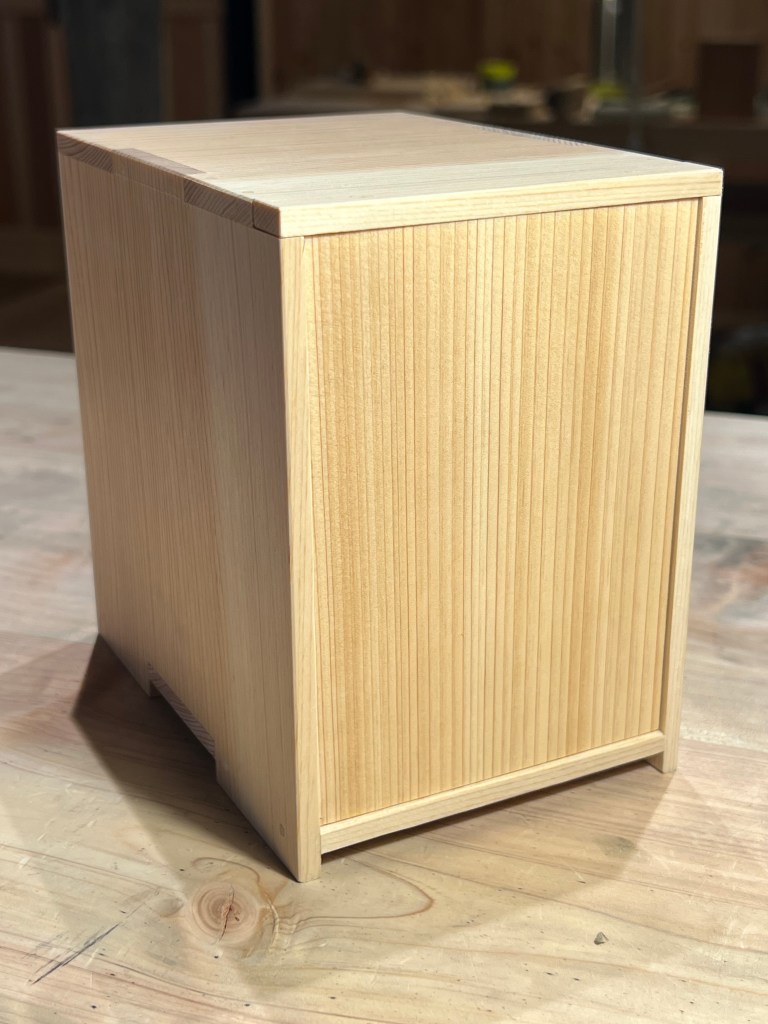
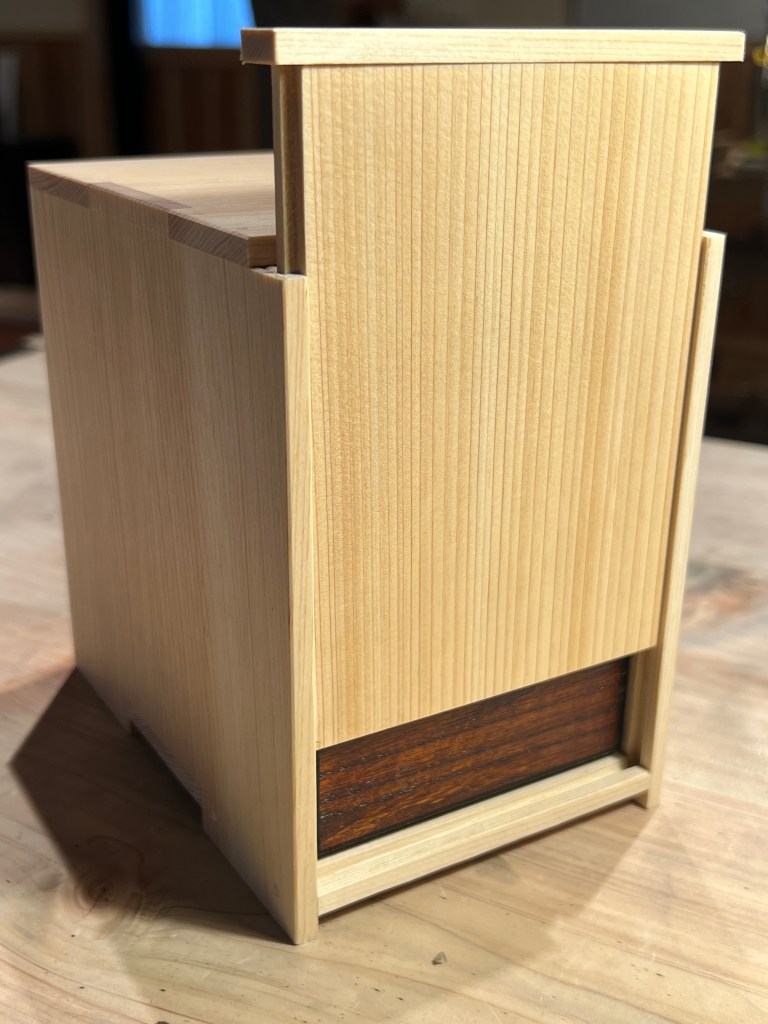

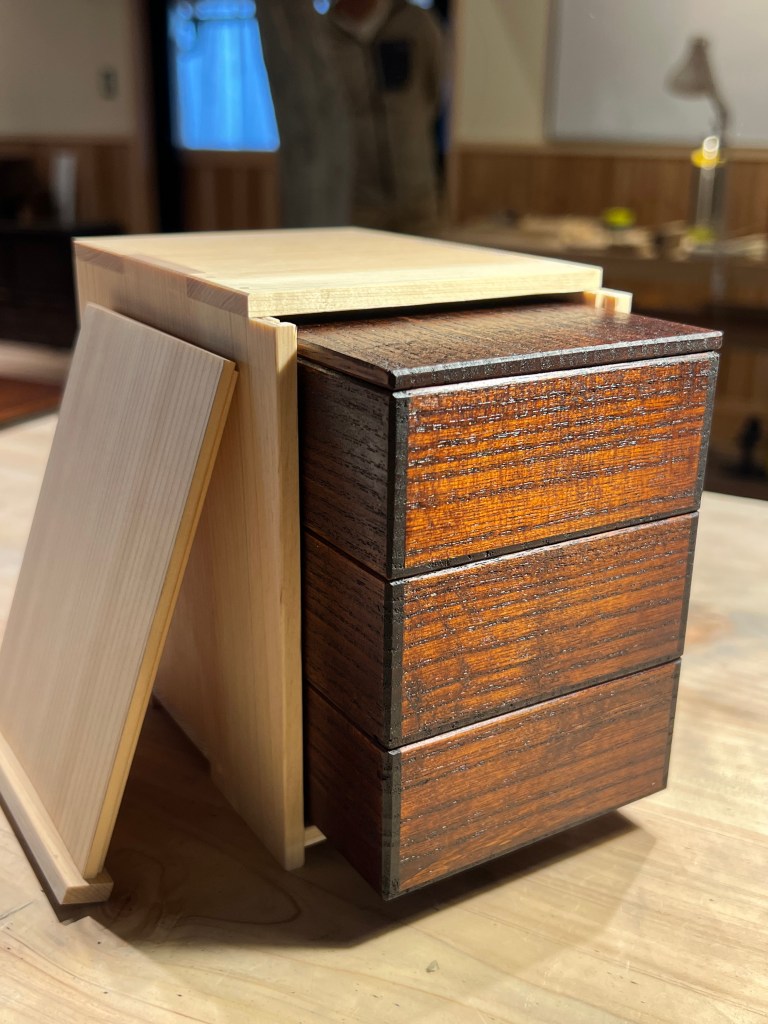
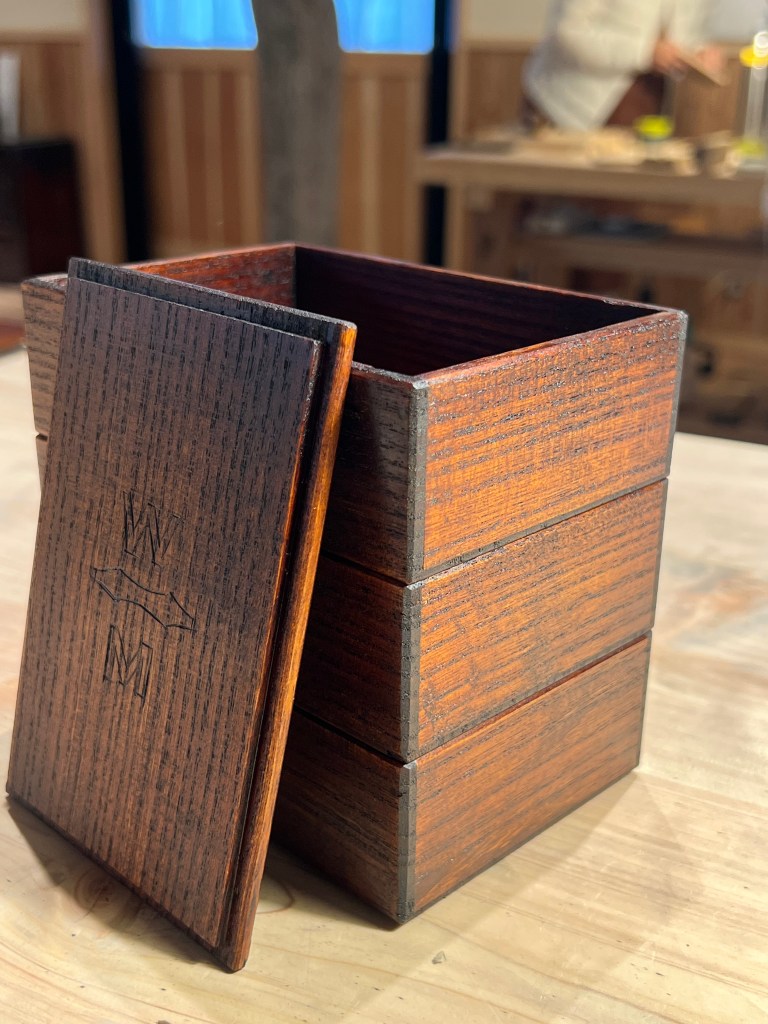
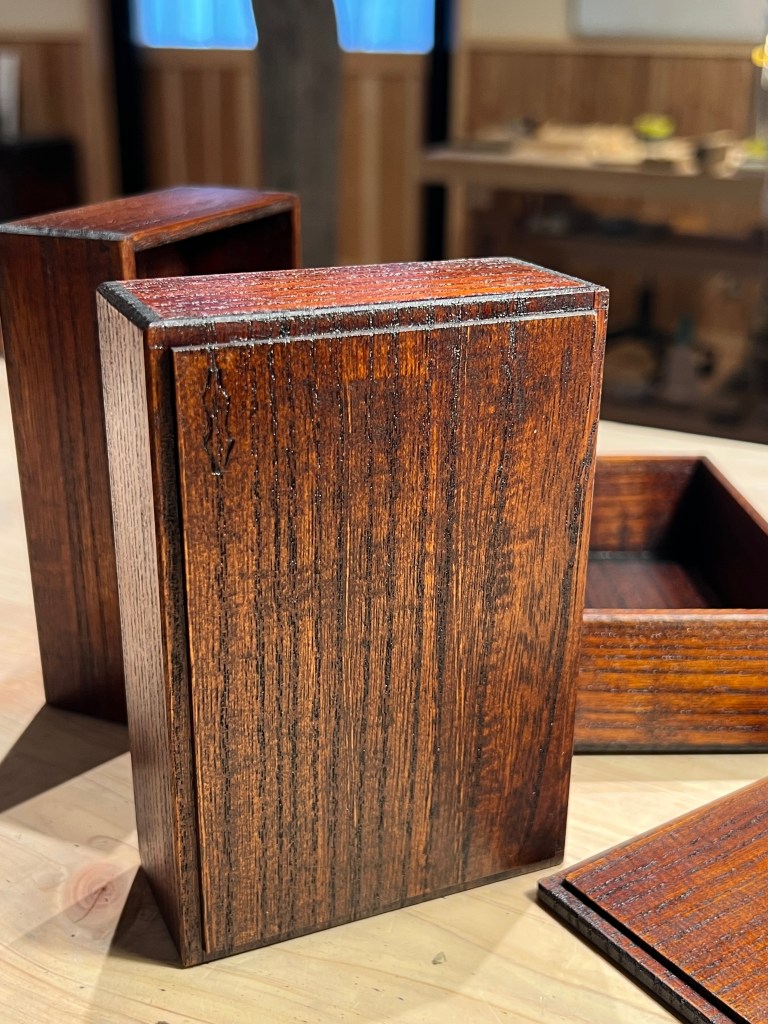
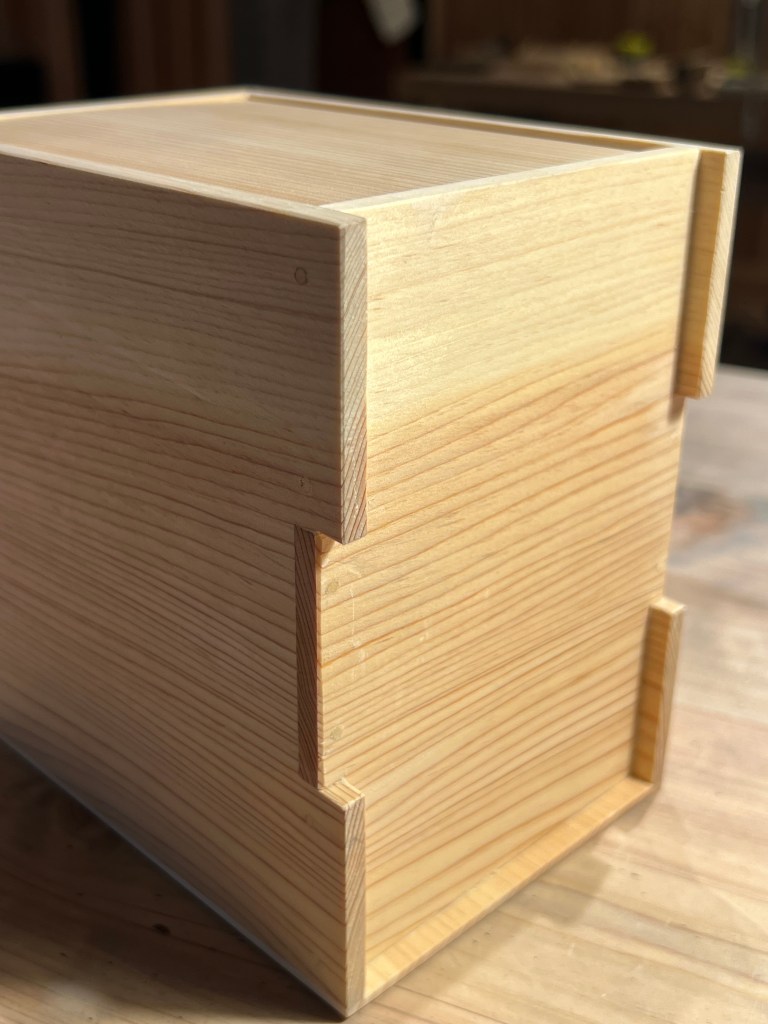

I was genuinely satisfied with the finished product. The lunch box itself is great, but what was most satisfying was learning the proper technique, from start to finish, and then knowing how to apply those techniques to a much broader range of projects. That said, I can’t wait to put my sashimono lunch box to use!


 The Wooden Mirror
Leave a comment