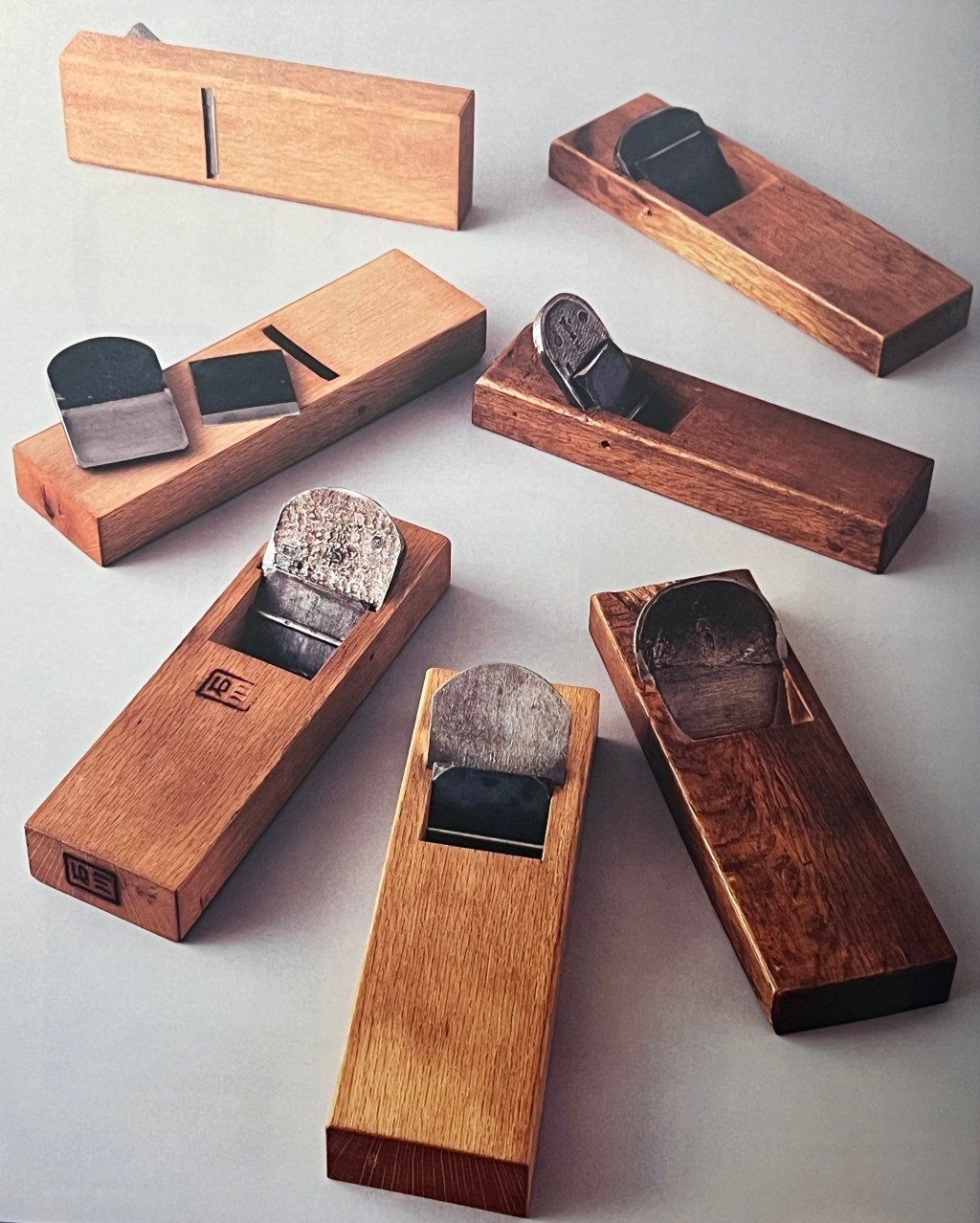

The word for “tools” in Japanese is 道具 (どうぐ) pronounced, “dōgu” which is a powerful word with a beautiful meaning, Dō means “way” or “path” and gu means “instrument”, “equipment”, or “utensil.” So it roughly translates to “Instrument of the Way.” It is said that carpenters and woodworkers of the past treated their tools with the utmost respect, never carelessly placing them down or storing them improperly, for they were the tools of their craft, and their craft was often a Way of life. Young apprentices would be reprimanded for mindlessly handling their tools.
I experienced the meaning of this term most vividly on our trip to the TAKENAKA CARPENTRY TOOLS MUSEUM in Kobe city (which didn’t technically fall within the first class of the program but is most relevant for this entry). Like a well cared-for antique gongfu teapot that shines from within, these tools are imbued with a spirit, they tell a story, they glow in a way that demands a certain level of respect from the woodworker. One doesn’t just handle these haphazardly; one embraces such a tool, respects its force, heeds to the instrument that supports the Way. It’s a powerful feeling. It invokes a will to treat these instruments with reverence.
Can you see it? I certainly can. Traditional Japanese arts are permeated with it.

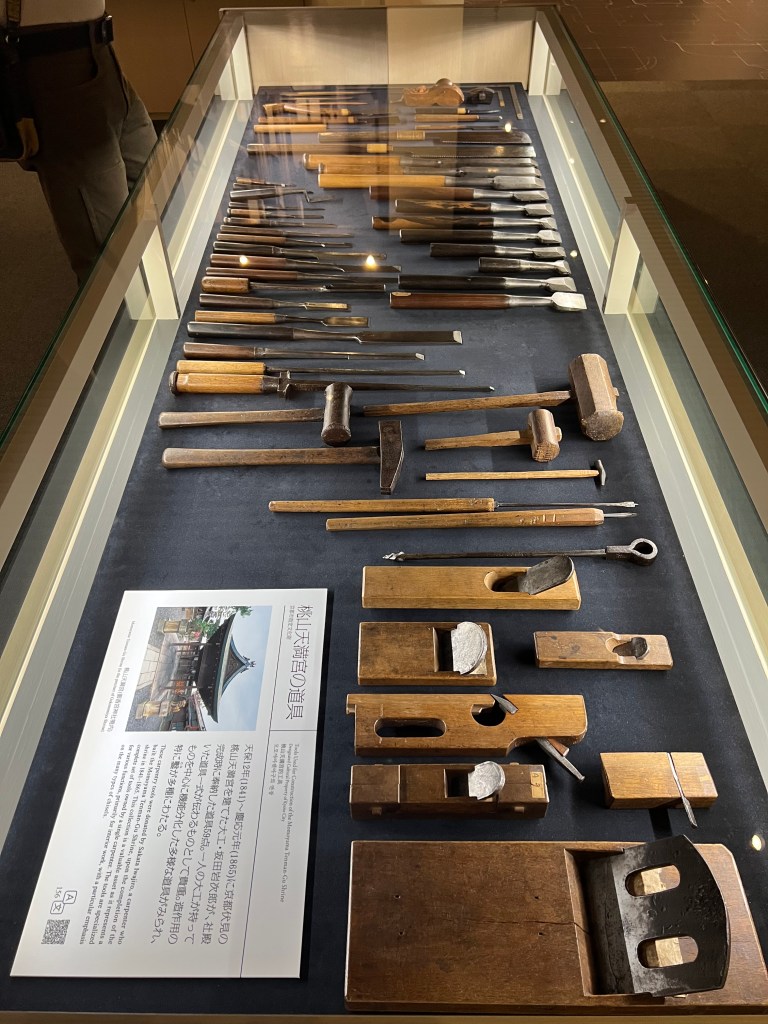

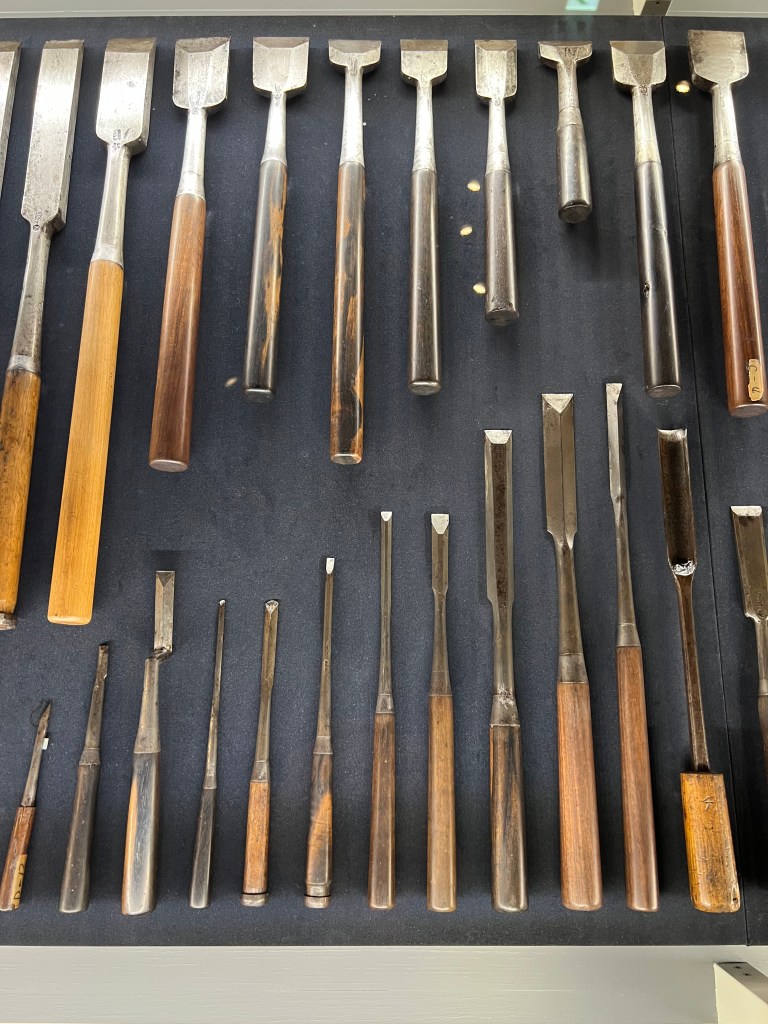
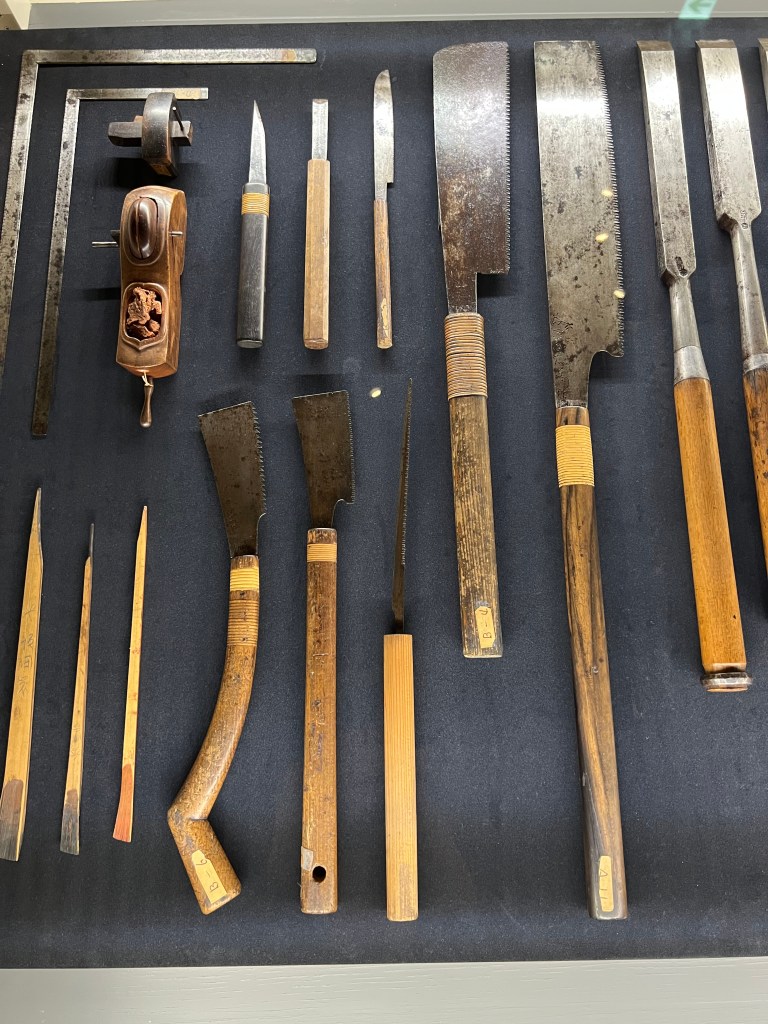

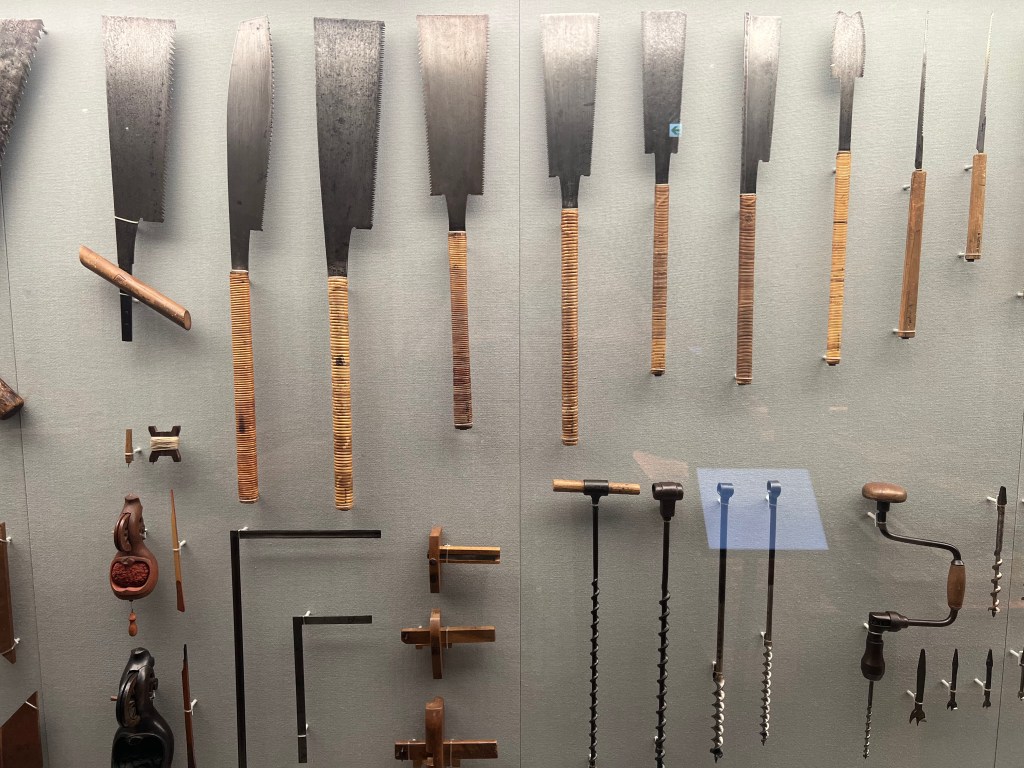
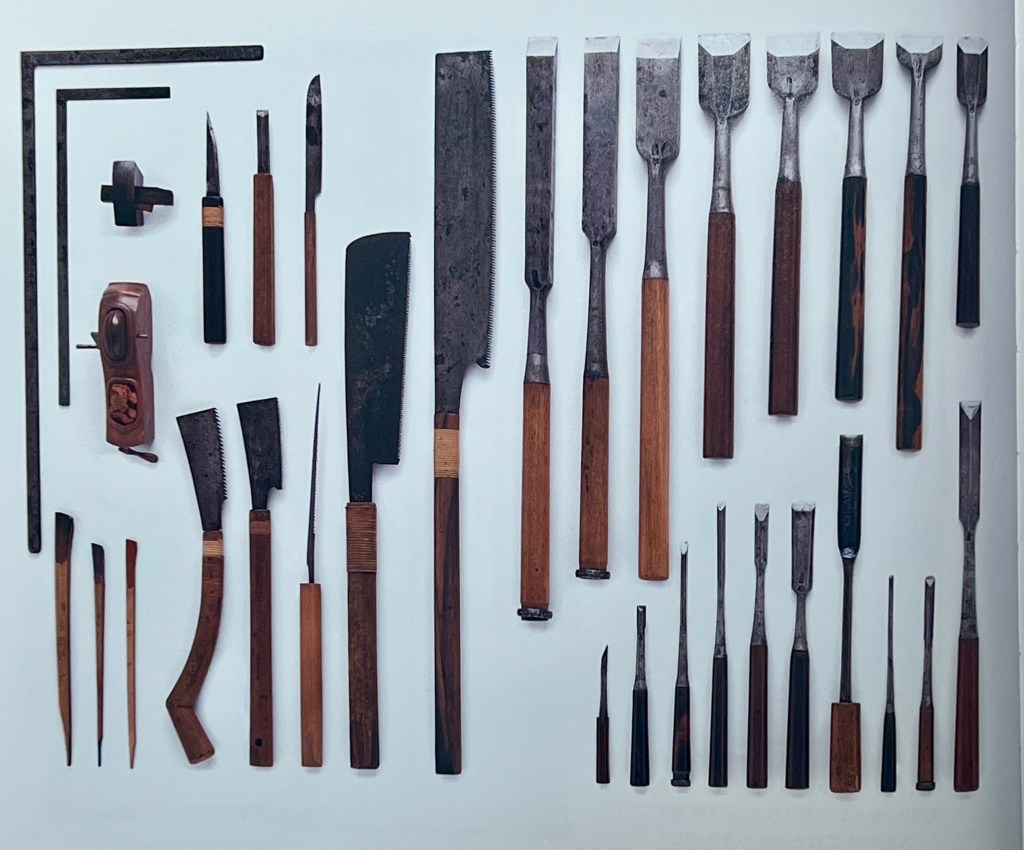
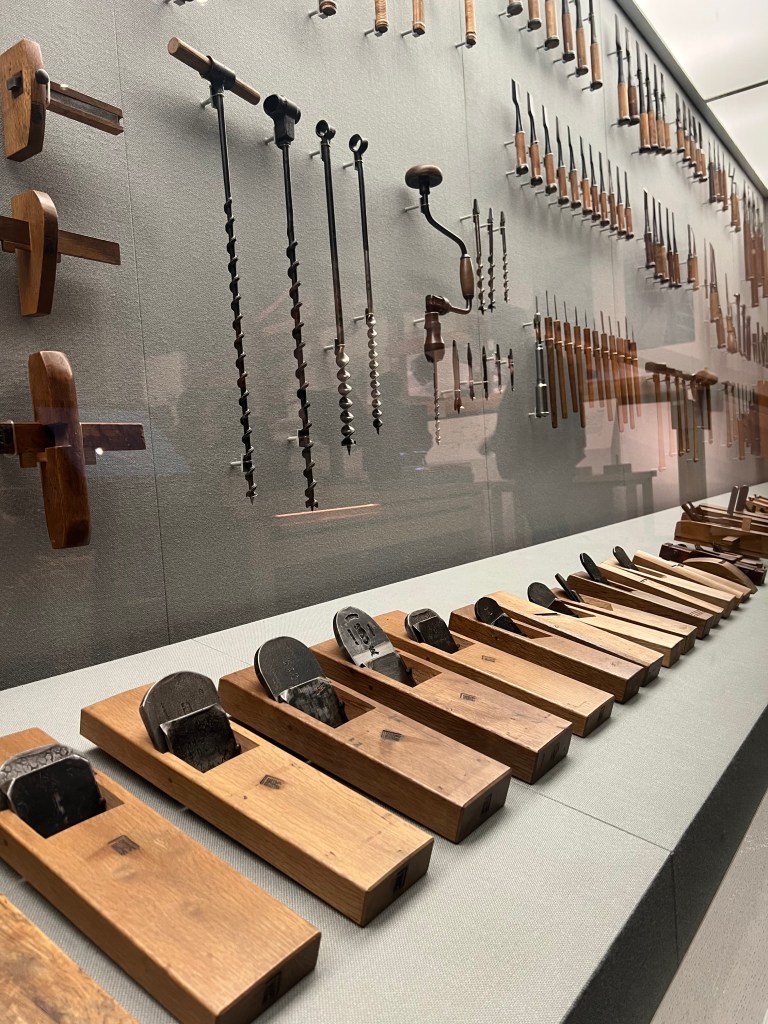
In Japanese tea, 茶道具 “sadōgu” means the instruments used in the Way of Tea. And in other Arts, when gu is attached, it refers to a tool in service of that particular Way. In woodcraft it refers to a woodworker’s tools, and as in all arts, one’s tools are more like treasures, extensions of the body, even good friends…
And when you feel that kind of energy within a tool that supports your craft, you can’t help but want to maintain it, use it mindfully, give it a home, pass it on to a worthy heir, and treat it as if it were alive because it very much is.
On Day 1, we were introduced to our teachers and our dōgu, which really just means—our teachers.
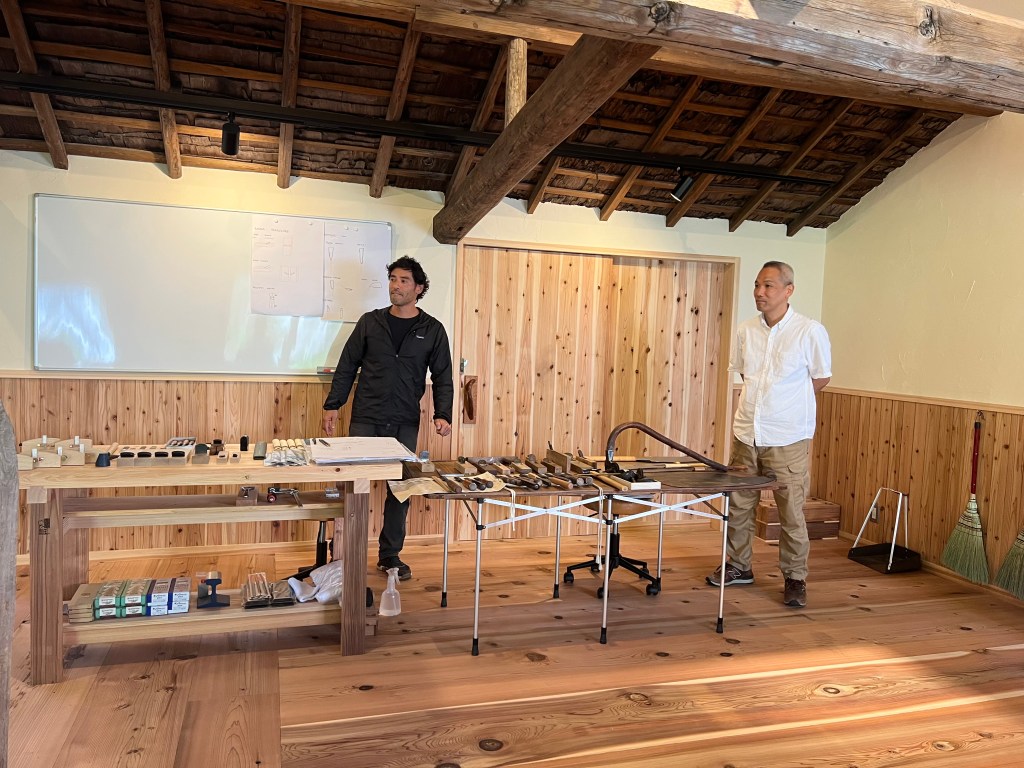
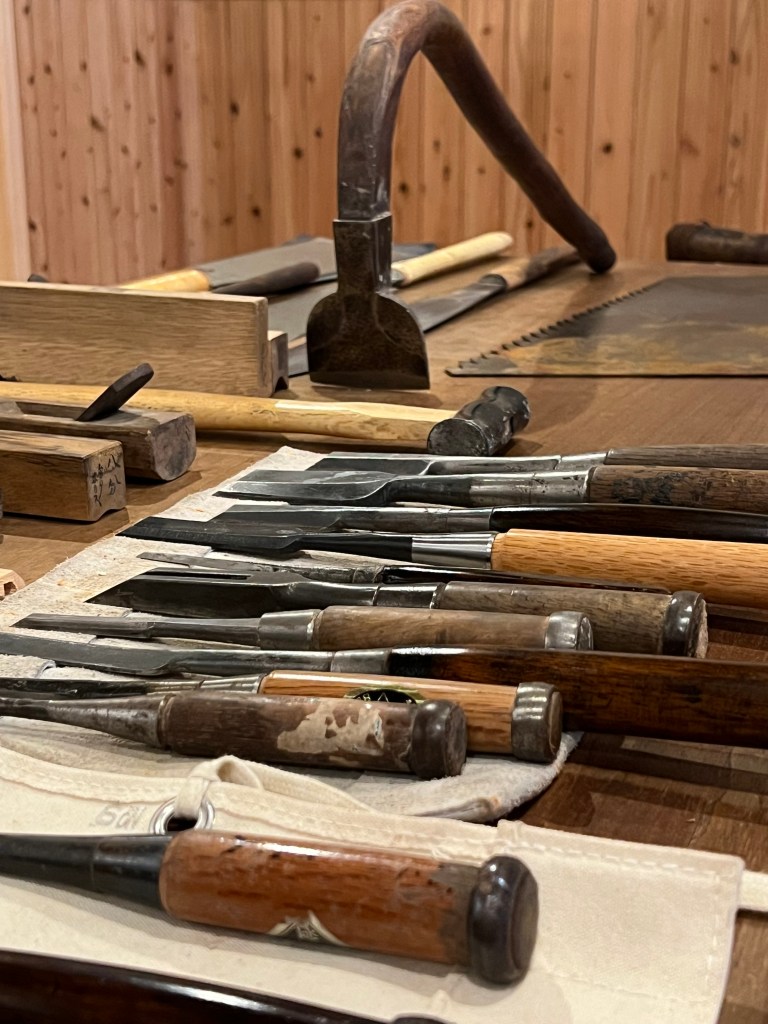
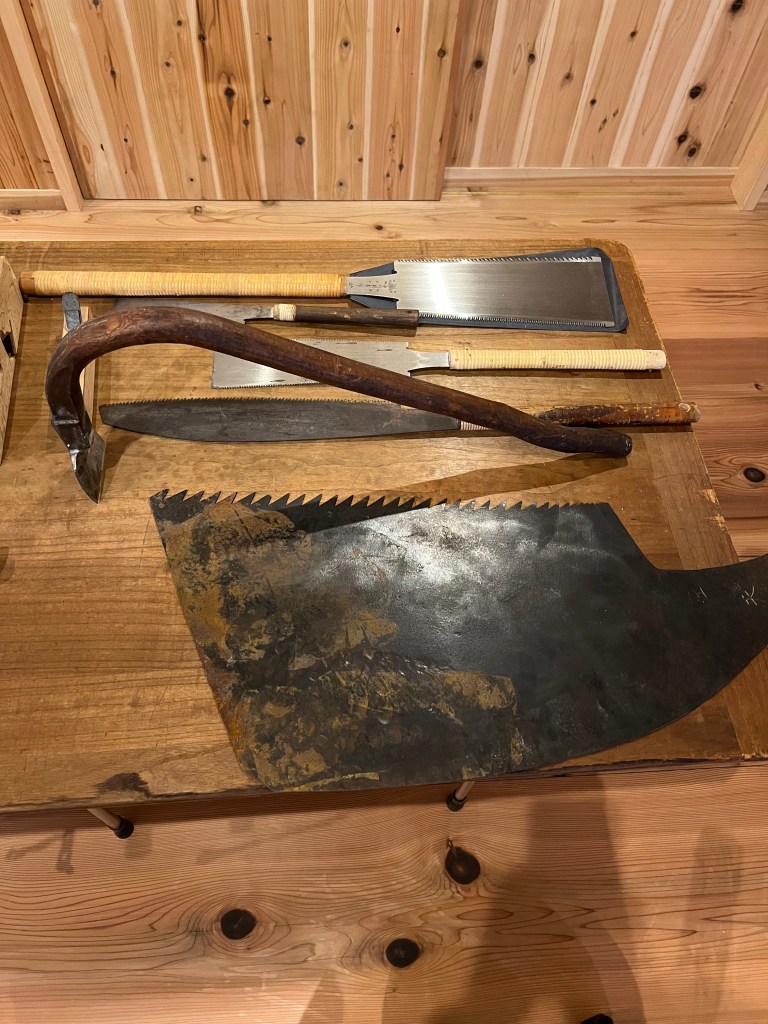
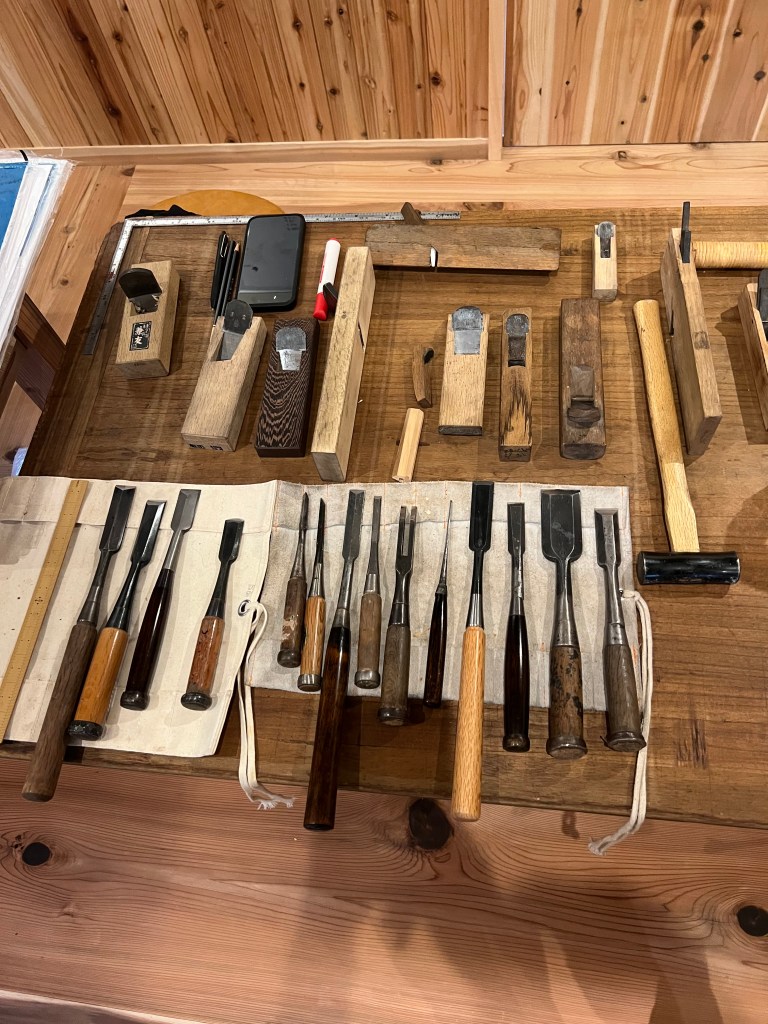
In our introduction to Sashimono we were given a:
- Hira kanna – standard flat plane
- with Japanese white oak body and iron blade + chipbreaker
- nomi – chisel
- kanazuchi – hammer
- nokogiri – Japanese pull saw
- dōzuki – with back brace, used specifically in sashimono.
- kebiki – marking gauge
- 1000 King brand Whetstone, 8000 Shapton stone, 400/1000 diamond plate, and an ultra flat metal plate
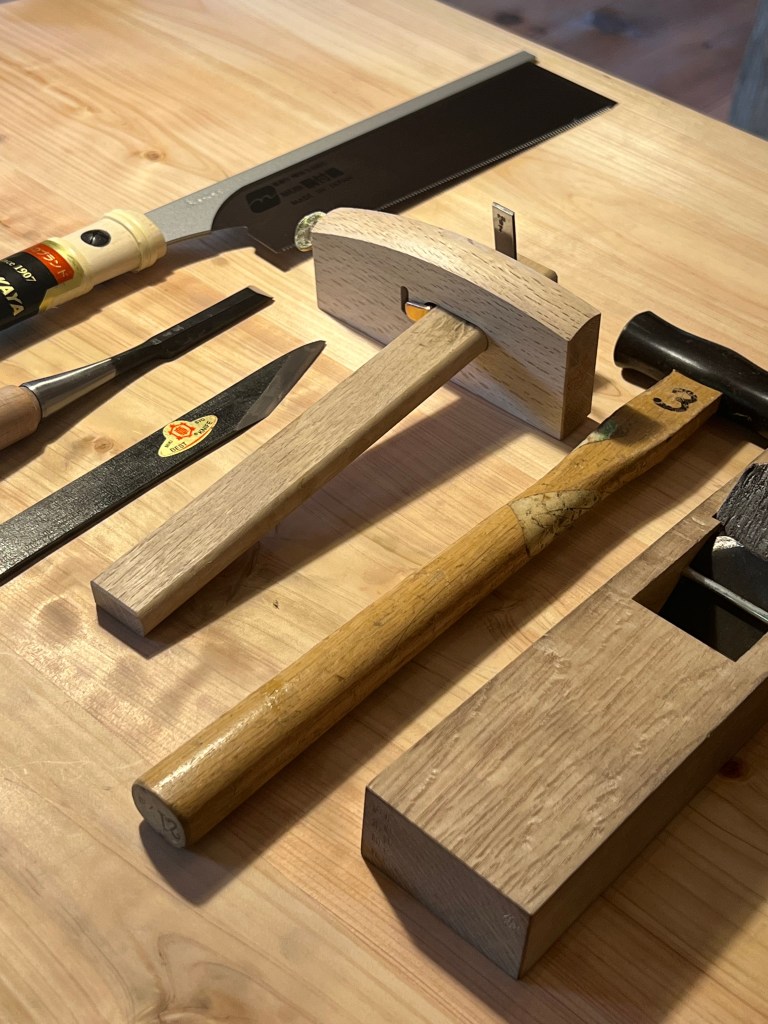
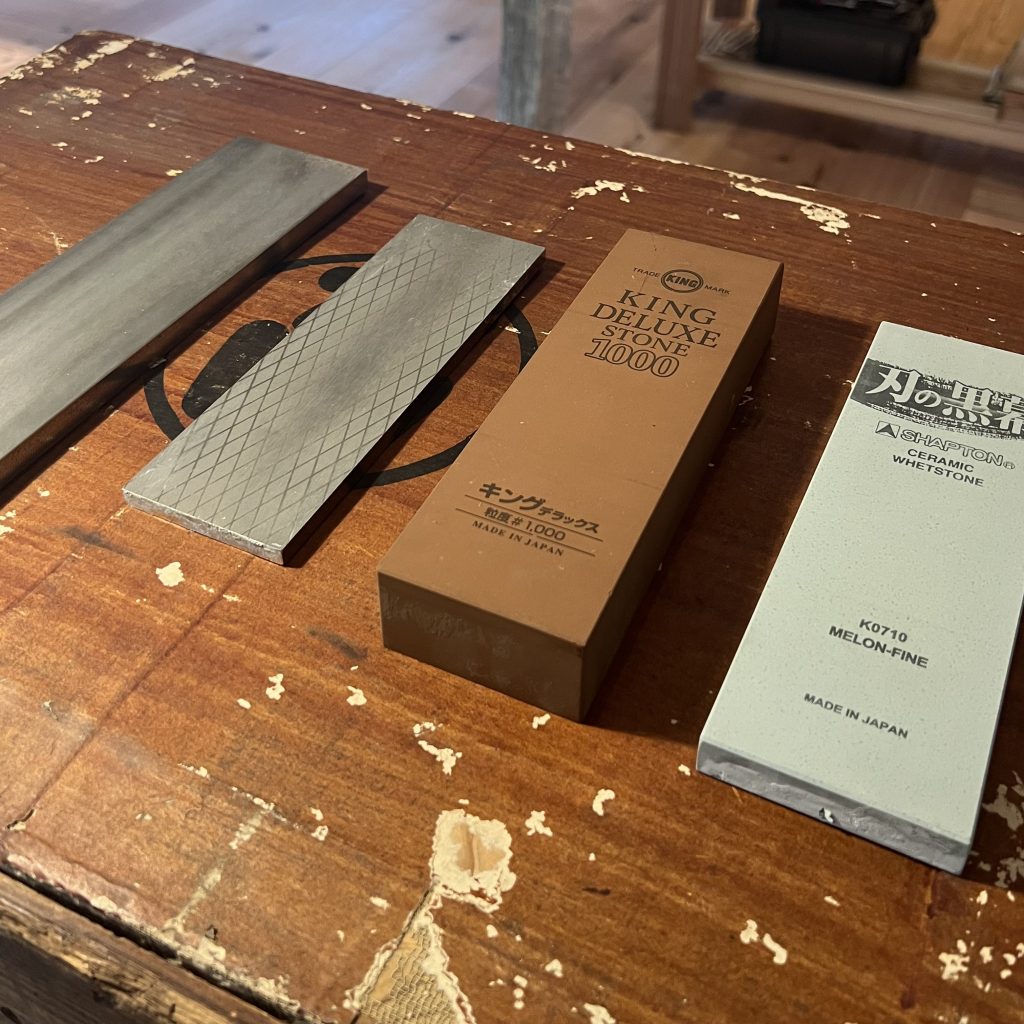
A lot of other tools are provided and used during class but these are the main ones we are leaning how to use and sharpen, all of which starts in the second class.
The work benches were made brand new for this apprenticeship. The top is made of thick hinoki while the legs and frame are made of red cedar. These benches were made by a company called “Bears Wood Project” because bears claw these trees removing the bark, then lick or gnaw at the exposed cambium. Woodworkers noticed that bears would choose particularly good quality trees to de-bark, but the damage also causes the trees to suffer and grow unusual protective layers that make it unsuitable for standard lumberyards. But BWP is closely observing the bears’ choice of trees and working with the timber instead of writing it off as “defective.” The benches are outstanding! We were so happy to initiate them for this apprenticeship.

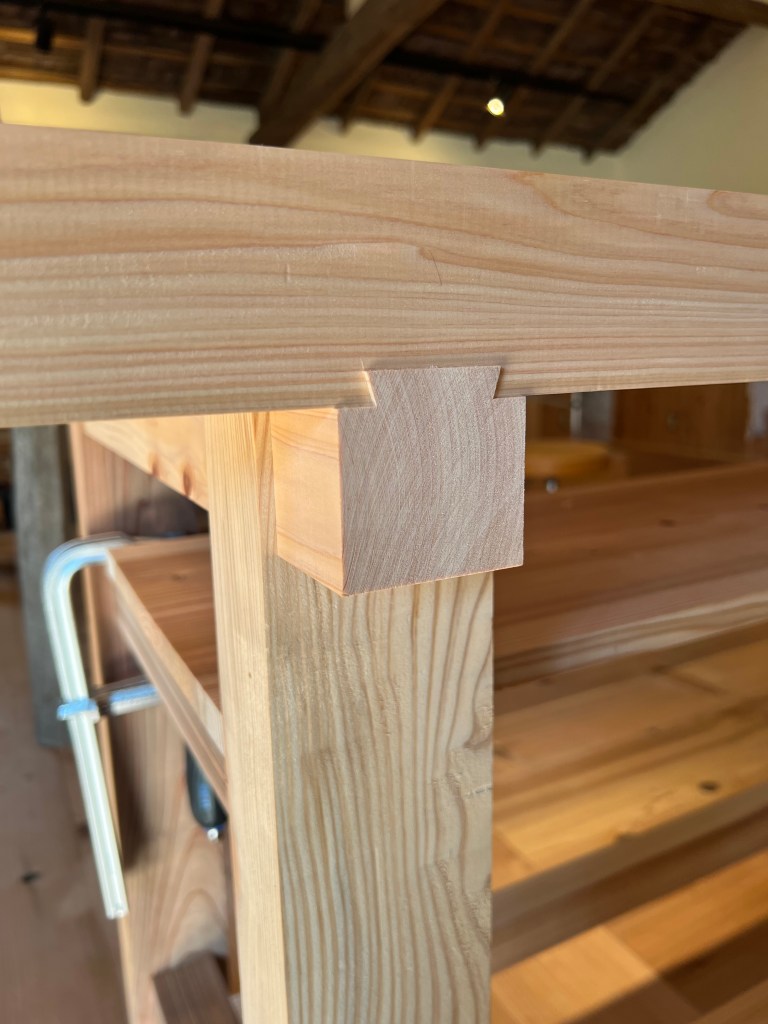
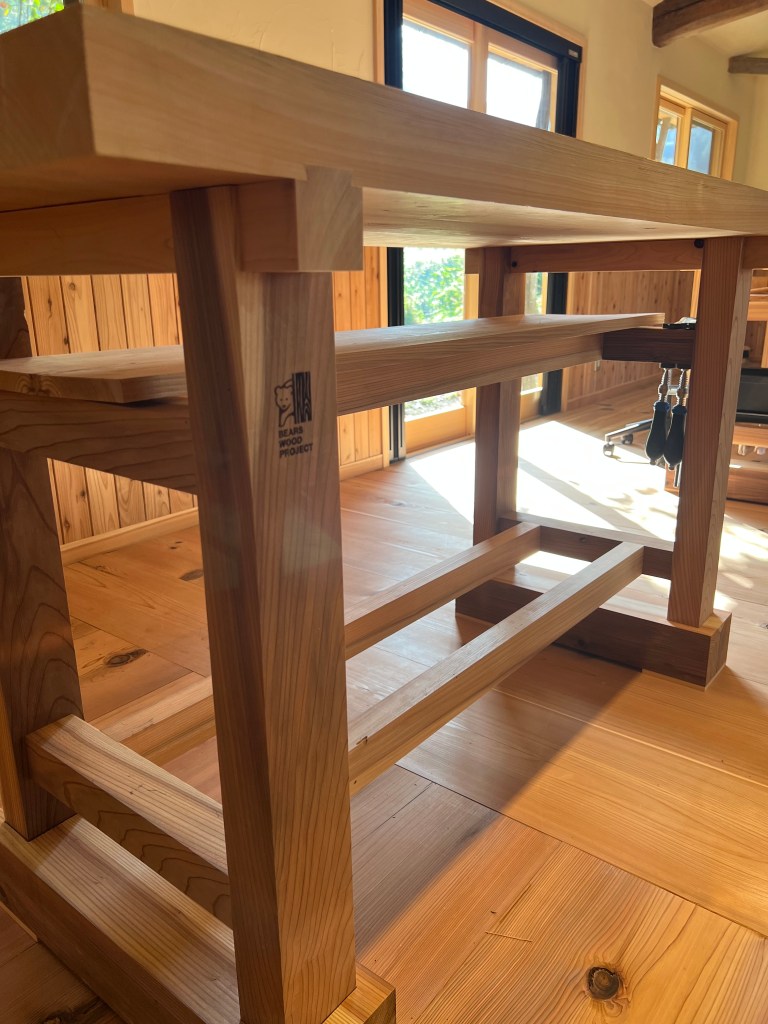
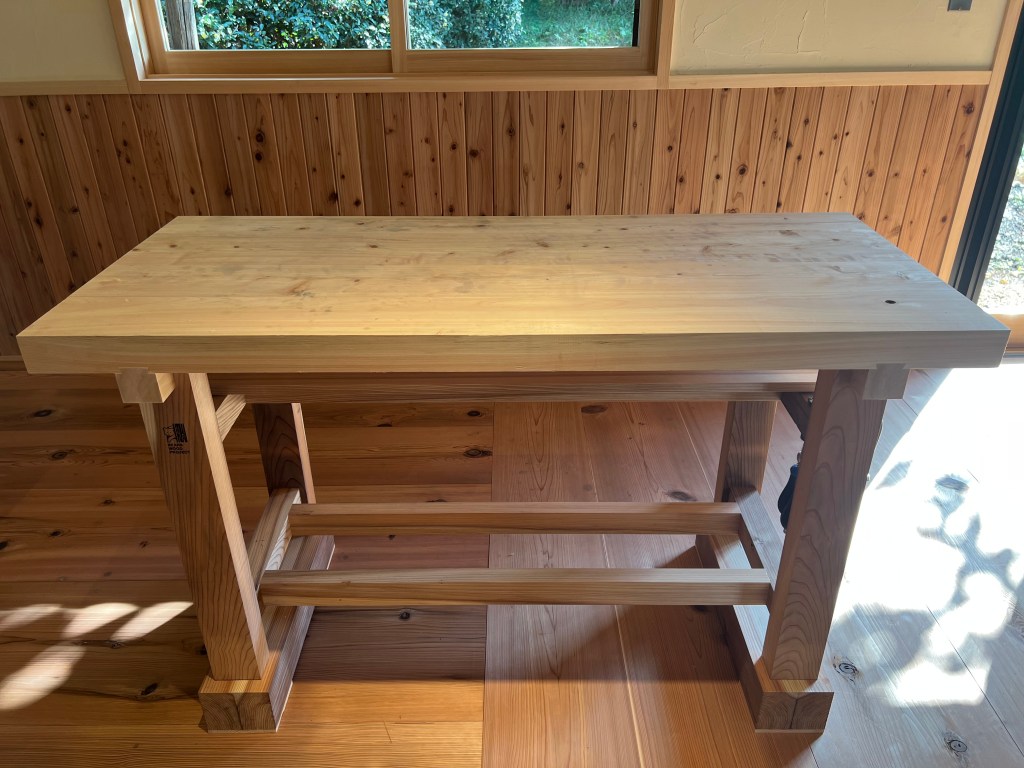
Tomorrow, class 2, we will be learning all about sharpening, starting with the kanna plane on our solid new workbenches.


 The Wooden Mirror
Leave a comment